
Fresh Projects is a UK-based software platform designed for architects, engineers, and other built-environment professionals to manage financial aspects of their projects. It helps teams track fees, timesheets, expenses, billing, and overall profitability to keep projects on budget and profitable. The platform also centralises project data, streamlines administrative tasks, and offers mobile app support for easy access and updates.
1a Colinette Road
London
SW15 6QG
© 2026 Fresh Projects
Product
Fresh Projects is a UK-based software platform designed for architects, engineers, and other built-environment professionals to manage financial aspects of their projects. It helps teams track fees, timesheets, expenses, billing, and overall profitability to keep projects on budget and profitable. The platform also centralises project data, streamlines administrative tasks, and offers mobile app support for easy access and updates.
1a Colinette Road
London
SW15 6QG
© 2026 Fresh Projects
Product
Calculate Your Cost Rate in 3 Simple Steps
Calculate Your Cost Rate in 3 Simple Steps
Calculate Your Cost Rate in 3 Simple Steps
Reading Time:
Reading Time:
6
6
minute(s)
minute(s)

Through years of working closely with architects and practice leaders on financial management, I have seen the same issue come up time and again. Given a simple set of financial and timesheet data, most people struggle to calculate a true cost rate on the first attempt. Not because the maths is difficult, but because cost rates are rarely explained properly.
Cost rates sit underneath almost every commercial decision a practice makes. They affect how you price work, how you resource projects, when you hire and whether you are actually making money.
In this article, I will show you how to calculate your true cost rate using four key numbers and a few simple illustrations.
Step 1: Determine your practice overheads
To establish your true cost rate, you first need to understand how your practice’s total costs are structured.
This should be done over a meaningful period, typically the last 12 months, to smooth out seasonality and one-off fluctuations.
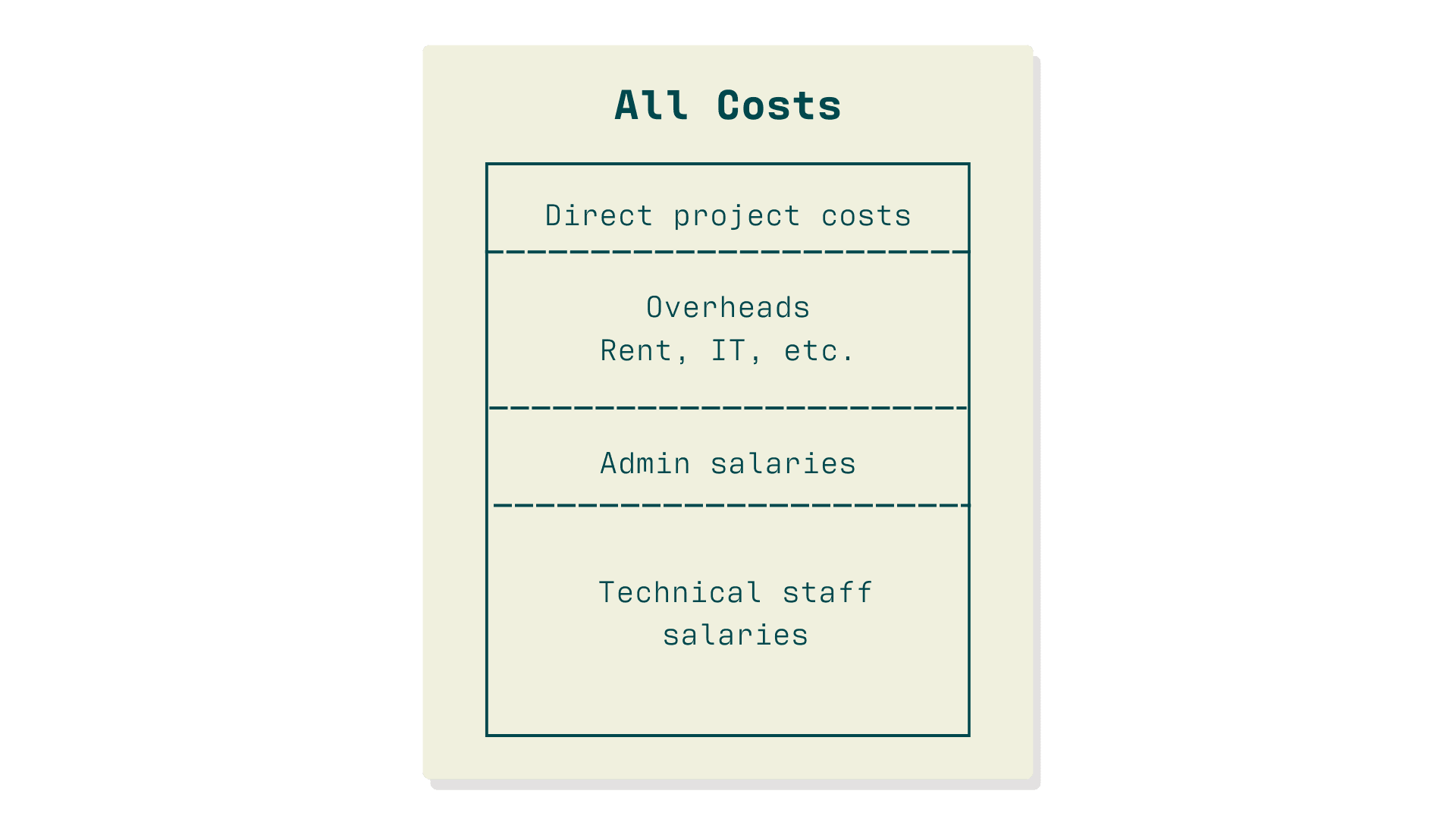
1.1 Split your costs into four buckets
Start by grouping all practice costs into the following categories:
Direct project costs
Costs that can be directly attributed to a specific project, such as sub-consultants, models, surveys and specialist reportsAdmin and support staff salaries
Staff who do not work directly on projects, such as finance, HR, office management and adminTechnical staff salaries
Staff who work directly on delivering projects, including architects, engineers and technical project staffEverything else
Overheads such as rent, IT, software licences, insurance, legal fees and professional subscriptions
1.2 Calculate your Technical Salary Percentage
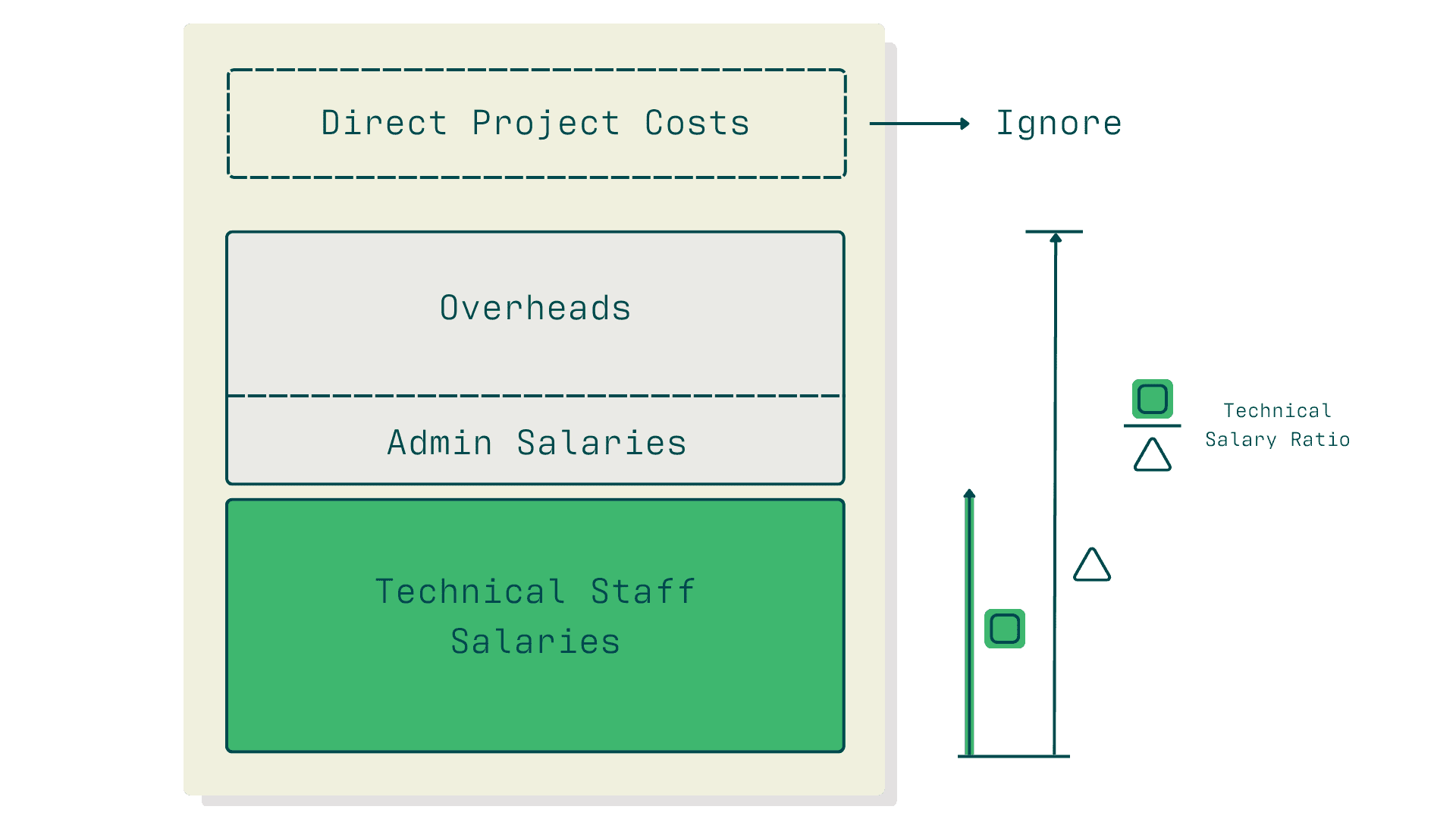
Direct project costs should be excluded from this calculation. These costs are directly attributable to projects and should ideally be reimbursed by clients wherever possible.
Once direct project costs are removed, calculate your Technical Salary Percentage.
Technical Salary Percentage = Technical Staff Salaries ÷ Total Costs (excluding direct project costs)
The closer this figure is to 100 percent, the more of your cost base is made up of fee-earning staff.
Example
Direct project costs: £2,000
Overheads: £5,000
Admin salaries: £3,000
Technical salaries: £10,000
Technical Salary Percentage
= £10,000 ÷ (£10,000 + £3,000 + £5,000)
= 55 percent
Typical ranges
Micro practice (1–3 staff): 75–90 percent
Small practice (5–20 staff): 60–70 percent
Medium practice (20–50 staff): 50–60 percent
Large practice (50+ staff): below 50 percent
As practices grow, overheads and support costs increase. This makes utilisation increasingly important.
Step 2: Determine each employee’s utilisation percentage
The second major driver of cost rate is utilisation.
Ideally, this should be calculated using historic timesheet data over at least a year to account for seasonality. If timesheets are not available, estimates may be used, but accuracy will be reduced.
For each employee:
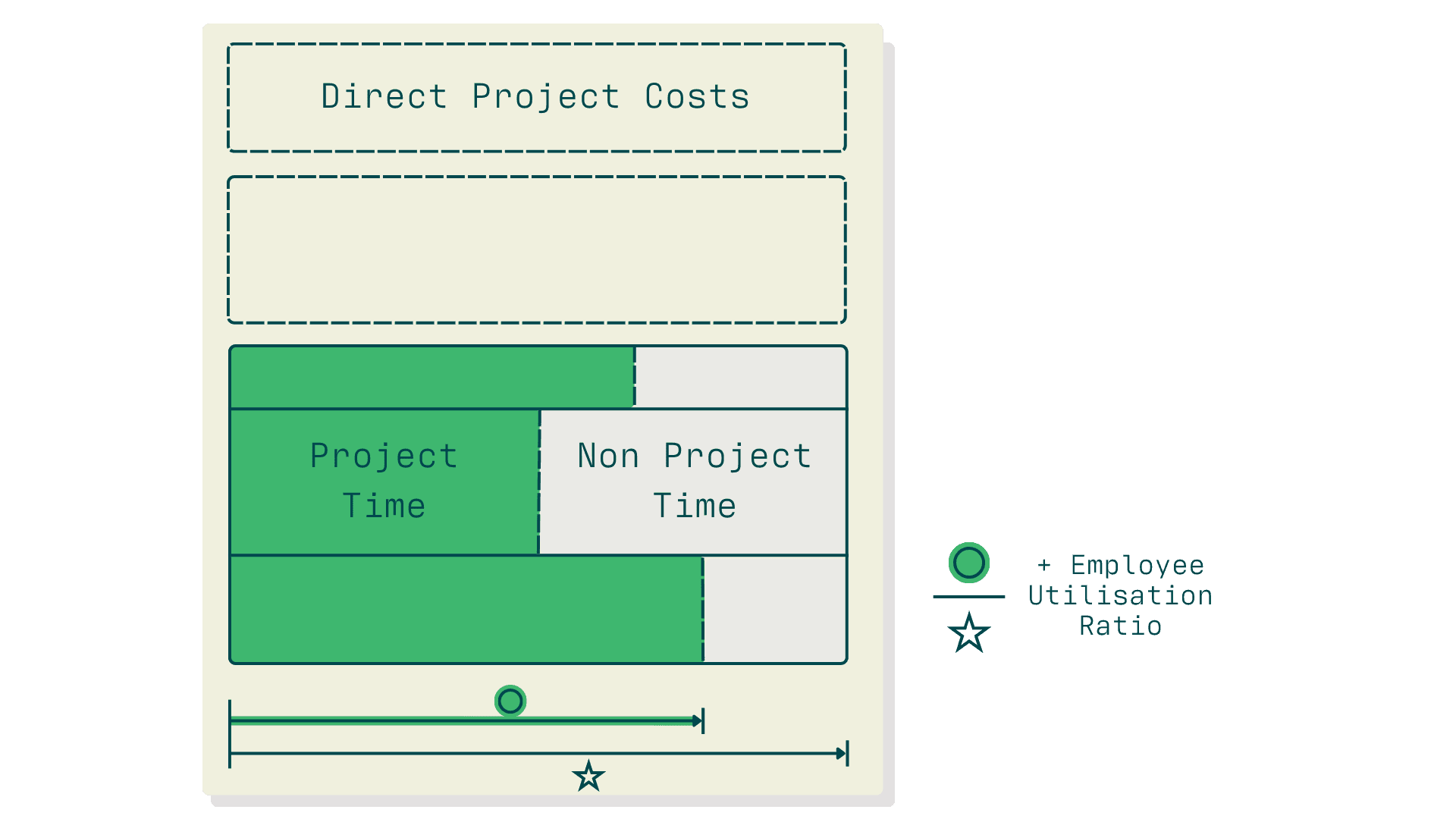
Utilisation Percentage = Project Time ÷ Total Time Recorded (including overtime)
Project time should include both fee-earning work and bid or competition work.
Example
Richard
Project time: 1,500 hours
Non-project time: 600 hours
Utilisation
= 1,500 ÷ (1,500 + 600)
= 71 percent
Zaha
Project time: 1,800 hours
Non-project time: 900 hours
Utilisation
= 1,800 ÷ (1,800 + 900)
= 66 percent
Non-project time includes holidays, admin, meetings, training and marketing.
Typical utilisation ranges
Junior and production staff: 80–90 percent
Team leaders: 70–80 percent
Owners and directors: 50–60 percent
Step 3: Put it all together
Once you have calculated both Technical Salary Percentage and Utilisation Percentage, you can calculate the true cost rate for each employee.
Cost Rate = Total Salary ÷ Contract Hours ÷ Utilisation Percentage ÷ Technical Salary Percentage
Where:
Total Salary includes all employment costs and benefits
Contract Hours is the total number of paid hours per year
Utilisation Percentage comes from Step 2
Technical Salary Percentage comes from Step 1
Example
Richard’s total cost to the practice is £30,000 per year. He works 8 hours per day, 5 days per week.
Contract hours per year: 2,080
Utilisation: 71 percent
Technical Salary Percentage: 55 percent
Cost Rate
= £30,000 ÷ 2,080 ÷ 0.71 ÷ 0.55
= £37 per hour
= £295 per day
This is the number your project fees must cover if the practice is to remain profitable.
How to improve profitability without cutting salaries
Cost rates increase for two main reasons:
Low utilisation
High overheads relative to technical salaries
You can improve profitability without reducing pay or expecting unpaid overtime by focusing on these two levers.
Increase the proportion of time staff spend on project work by removing unnecessary admin
Keep overheads and non-fee-earning costs under control
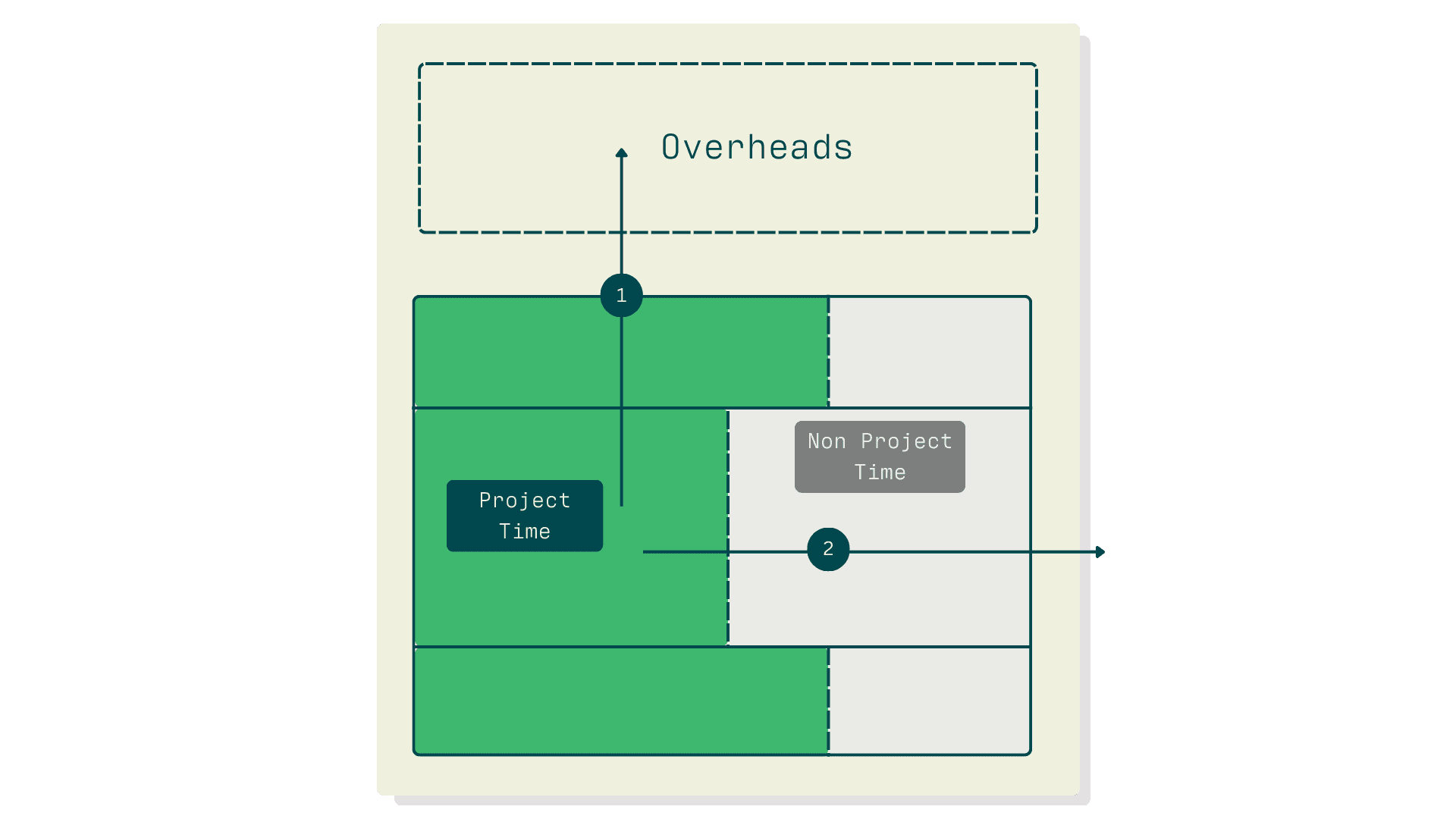
The goal is simple. You want as much of your cost base as possible working directly on projects.
Why this matters
Understanding cost rates is not an academic exercise.
It underpins:
Fee setting
Resourcing decisions
Hiring
Long-term profitability
Practices that understand their true cost rates make calmer, more confident decisions. Practices that do not often discover problems too late.
Through years of working closely with architects and practice leaders on financial management, I have seen the same issue come up time and again. Given a simple set of financial and timesheet data, most people struggle to calculate a true cost rate on the first attempt. Not because the maths is difficult, but because cost rates are rarely explained properly.
Cost rates sit underneath almost every commercial decision a practice makes. They affect how you price work, how you resource projects, when you hire and whether you are actually making money.
In this article, I will show you how to calculate your true cost rate using four key numbers and a few simple illustrations.
Step 1: Determine your practice overheads
To establish your true cost rate, you first need to understand how your practice’s total costs are structured.
This should be done over a meaningful period, typically the last 12 months, to smooth out seasonality and one-off fluctuations.
1.1 Split your costs into four buckets
Start by grouping all practice costs into the following categories:
Direct project costs
Costs that can be directly attributed to a specific project, such as sub-consultants, models, surveys and specialist reportsAdmin and support staff salaries
Staff who do not work directly on projects, such as finance, HR, office management and adminTechnical staff salaries
Staff who work directly on delivering projects, including architects, engineers and technical project staffEverything else
Overheads such as rent, IT, software licences, insurance, legal fees and professional subscriptions
1.2 Calculate your Technical Salary Percentage
Direct project costs should be excluded from this calculation. These costs are directly attributable to projects and should ideally be reimbursed by clients wherever possible.
Once direct project costs are removed, calculate your Technical Salary Percentage.
Technical Salary Percentage = Technical Staff Salaries ÷ Total Costs (excluding direct project costs)
The closer this figure is to 100 percent, the more of your cost base is made up of fee-earning staff.
Example
Direct project costs: £2,000
Overheads: £5,000
Admin salaries: £3,000
Technical salaries: £10,000
Technical Salary Percentage
= £10,000 ÷ (£10,000 + £3,000 + £5,000)
= 55 percent
Typical ranges
Micro practice (1–3 staff): 75–90 percent
Small practice (5–20 staff): 60–70 percent
Medium practice (20–50 staff): 50–60 percent
Large practice (50+ staff): below 50 percent
As practices grow, overheads and support costs increase. This makes utilisation increasingly important.
Step 2: Determine each employee’s utilisation percentage
The second major driver of cost rate is utilisation.
Ideally, this should be calculated using historic timesheet data over at least a year to account for seasonality. If timesheets are not available, estimates may be used, but accuracy will be reduced.
For each employee:
Utilisation Percentage = Project Time ÷ Total Time Recorded (including overtime)
Project time should include both fee-earning work and bid or competition work.
Example
Richard
Project time: 1,500 hours
Non-project time: 600 hours
Utilisation
= 1,500 ÷ (1,500 + 600)
= 71 percent
Zaha
Project time: 1,800 hours
Non-project time: 900 hours
Utilisation
= 1,800 ÷ (1,800 + 900)
= 66 percent
Non-project time includes holidays, admin, meetings, training and marketing.
Typical utilisation ranges
Junior and production staff: 80–90 percent
Team leaders: 70–80 percent
Owners and directors: 50–60 percent
Step 3: Put it all together
Once you have calculated both Technical Salary Percentage and Utilisation Percentage, you can calculate the true cost rate for each employee.
Cost Rate = Total Salary ÷ Contract Hours ÷ Utilisation Percentage ÷ Technical Salary Percentage
Where:
Total Salary includes all employment costs and benefits
Contract Hours is the total number of paid hours per year
Utilisation Percentage comes from Step 2
Technical Salary Percentage comes from Step 1
Example
Richard’s total cost to the practice is £30,000 per year. He works 8 hours per day, 5 days per week.
Contract hours per year: 2,080
Utilisation: 71 percent
Technical Salary Percentage: 55 percent
Cost Rate
= £30,000 ÷ 2,080 ÷ 0.71 ÷ 0.55
= £37 per hour
= £295 per day
This is the number your project fees must cover if the practice is to remain profitable.
How to improve profitability without cutting salaries
Cost rates increase for two main reasons:
Low utilisation
High overheads relative to technical salaries
You can improve profitability without reducing pay or expecting unpaid overtime by focusing on these two levers.
Increase the proportion of time staff spend on project work by removing unnecessary admin
Keep overheads and non-fee-earning costs under control
The goal is simple. You want as much of your cost base as possible working directly on projects.
Why this matters
Understanding cost rates is not an academic exercise.
It underpins:
Fee setting
Resourcing decisions
Hiring
Long-term profitability
Practices that understand their true cost rates make calmer, more confident decisions. Practices that do not often discover problems too late.
Published:
Published:


Why Reporting Still Leaves Architecture and Engineering Firms Guessing
Why Reporting Still Leaves Architecture and Engineering Firms Guessing
Why Reporting Still Leaves Architecture and Engineering Firms Guessing
Inside many built environment firms, meetings meant for decisions quietly turn into debates about the numbers on the page.
Inside many built environment firms, meetings meant for decisions quietly turn into debates about the numbers on the page.
Read More
Read More

If One Office Says “That’s Not How We Do It”, Leadership is Flying Blind
If One Office Says “That’s Not How We Do It”, Leadership is Flying Blind
If One Office Says “That’s Not How We Do It”, Leadership is Flying Blind
In many built environment consultancies, reporting technically works. The challenge is that clarity often arrives after the moment when it would have influenced action.
In many built environment consultancies, reporting technically works. The challenge is that clarity often arrives after the moment when it would have influenced action.
Read More
Read More

Why Reporting Still Slows Down Established Firms Delivering Services in the Built Environment
Why Reporting Still Slows Down Established Firms Delivering Services in the Built Environment
Why Reporting Still Slows Down Established Firms Delivering Services in the Built Environment
Even with reporting systems in place, many architecture, engineering and quantity surveying firms find that insight arrives too late to influence decisions during delivery.
Even with reporting systems in place, many architecture, engineering and quantity surveying firms find that insight arrives too late to influence decisions during delivery.
Read More
Read More

How to Compare Practice Management Tools for Architect and Engineering Firms in 2026
How to Compare Practice Management Tools for Architect and Engineering Firms in 2026
How to Compare Practice Management Tools for Architect and Engineering Firms in 2026
Choosing a practice management system is no longer about feature lists. This guide explains how architecture and engineering firms should compare tools in 2026, focusing on adoption, usability and decision-making rather than complexity.
Choosing a practice management system is no longer about feature lists. This guide explains how architecture and engineering firms should compare tools in 2026, focusing on adoption, usability and decision-making rather than complexity.
Read More
Read More

Autumn Budget 2025: What It Means for Architecture and Engineering Firms
Autumn Budget 2025: What It Means for Architecture and Engineering Firms
Autumn Budget 2025: What It Means for Architecture and Engineering Firms
Implications for resourcing, margins and medium-term planning
Implications for resourcing, margins and medium-term planning
Read More
Read More
How Larger Architecture and Engineering Firms Stay Profitable in a Slower Construction Market
How Larger Architecture and Engineering Firms Stay Profitable in a Slower Construction Market
How Larger Architecture and Engineering Firms Stay Profitable in a Slower Construction Market
What 50–100 person practices are tightening up when pipelines soften
What 50–100 person practices are tightening up when pipelines soften
Read More
Read More

Why Traditional Reporting is Holding A&E Firms Back
Why Traditional Reporting is Holding A&E Firms Back
Why Traditional Reporting is Holding A&E Firms Back
Why Traditional Reporting is Holding A&E Firms Back
Why Traditional Reporting is Holding A&E Firms Back
Read More
Read More

Spreadsheets in A&E Firms: Usage, Key Features, and Underappreciated Gems
Spreadsheets in A&E Firms: Usage, Key Features, and Underappreciated Gems
Spreadsheets in A&E Firms: Usage, Key Features, and Underappreciated Gems
A practical guide to using Excel and Sheets well, and knowing when to graduate to purpose-built systems without losing the flexibility you love.
A practical guide to using Excel and Sheets well, and knowing when to graduate to purpose-built systems without losing the flexibility you love.
Read More
Read More

Breaking Barriers in AEC: Meet the Women Driving Fresh Projects
Breaking Barriers in AEC: Meet the Women Driving Fresh Projects
Breaking Barriers in AEC: Meet the Women Driving Fresh Projects
Why representation, visibility and better systems matter for the future of architecture and engineering
Why representation, visibility and better systems matter for the future of architecture and engineering
Read More
Read More

Legacy Firms, Future Focus: Why Architecture’s Crossroads Is a Leadership Moment
Legacy Firms, Future Focus: Why Architecture’s Crossroads Is a Leadership Moment
Legacy Firms, Future Focus: Why Architecture’s Crossroads Is a Leadership Moment
How firm leaders can protect margin, prepare successors and modernise delivery without losing what made them successful
How firm leaders can protect margin, prepare successors and modernise delivery without losing what made them successful
Read More
Read More

Outgrowing Spreadsheets: 5 Ways to Maintain Profitability as Your Firm Grows
Outgrowing Spreadsheets: 5 Ways to Maintain Profitability as Your Firm Grows
Outgrowing Spreadsheets: 5 Ways to Maintain Profitability as Your Firm Grows
How architecture and engineering practices protect margin as teams and project complexity increase
How architecture and engineering practices protect margin as teams and project complexity increase
Read More
Read More

The Profitability Pyramid: Where UK Architecture Firms Make and Lose Money
The Profitability Pyramid: Where UK Architecture Firms Make and Lose Money
The Profitability Pyramid: Where UK Architecture Firms Make and Lose Money
Understanding the real drivers of financial performance for medium and large practices over the past year
Understanding the real drivers of financial performance for medium and large practices over the past year
Read More
Read More

3 Lessons to Help You Run a More Profitable Practice
3 Lessons to Help You Run a More Profitable Practice
3 Lessons to Help You Run a More Profitable Practice
Practical insights from A&E leaders on spotting profit risks early, communicating value, and protecting margins
Practical insights from A&E leaders on spotting profit risks early, communicating value, and protecting margins
Read More
Read More

Embracing Neurodiversity in Architecture
Embracing Neurodiversity in Architecture
Embracing Neurodiversity in Architecture
How inclusive practice design can unlock creativity, innovation and operational clarity
How inclusive practice design can unlock creativity, innovation and operational clarity
Read More
Read More

Profitable Projects: Winning the Right Projects in AEC
Profitable Projects: Winning the Right Projects in AEC
Profitable Projects: Winning the Right Projects in AEC
How to qualify leads, focus your pipeline and forecast success more confidently
How to qualify leads, focus your pipeline and forecast success more confidently
Read More
Read More

Profitable Projects: The Art of Cashflow Alchemy in AEC
Profitable Projects: The Art of Cashflow Alchemy in AEC
Profitable Projects: The Art of Cashflow Alchemy in AEC
How architecture and engineering firms can turn unpredictable cash flow into a strategic advantage
How architecture and engineering firms can turn unpredictable cash flow into a strategic advantage
Read More
Read More

Profitable Projects: A Three-Part Series on AEC Profitability - Setting the Right Fee for Success
Profitable Projects: A Three-Part Series on AEC Profitability - Setting the Right Fee for Success
Profitable Projects: A Three-Part Series on AEC Profitability - Setting the Right Fee for Success
Why bottom-up fee setting, clear scope and real-time cost visibility underpin profitable projects
Why bottom-up fee setting, clear scope and real-time cost visibility underpin profitable projects
Read More
Read More

How Firm Management Tools for Architects and Engineers Drastically Increase Profits
How Firm Management Tools for Architects and Engineers Drastically Increase Profits
How Firm Management Tools for Architects and Engineers Drastically Increase Profits
Why better visibility across projects, people and finances is now essential for sustainable practice performance
Why better visibility across projects, people and finances is now essential for sustainable practice performance
Read More
Read More

How to Manage Inflation on Architecture Projects
How to Manage Inflation on Architecture Projects
How to Manage Inflation on Architecture Projects
Practical ways to protect fees and margins when costs change mid-project
Practical ways to protect fees and margins when costs change mid-project
Read More
Read More

An Architect’s Guide to Project Budgeting
An Architect’s Guide to Project Budgeting
An Architect’s Guide to Project Budgeting
How to build realistic, profitable project budgets that support better pricing and delivery
How to build realistic, profitable project budgets that support better pricing and delivery
Read More
Read More

An Architect’s Guide to Managing Scope Creep
An Architect’s Guide to Managing Scope Creep
An Architect’s Guide to Managing Scope Creep
How to protect fees, margins and client relationships when projects change
How to protect fees, margins and client relationships when projects change
Read More
Read More

Improve Project Profitability: An Architect’s Guide
Improve Project Profitability: An Architect’s Guide
Improve Project Profitability: An Architect’s Guide
Practical ways architecture practices can protect margins and make better commercial decisions
Practical ways architecture practices can protect margins and make better commercial decisions
Read More
Read More

Pricing Methods for Architects: How to Price Architecture Services
Pricing Methods for Architects: How to Price Architecture Services
Pricing Methods for Architects: How to Price Architecture Services
When to use hourly rates, fixed fees or percentage pricing, and how to choose with confidence
When to use hourly rates, fixed fees or percentage pricing, and how to choose with confidence
Read More
Read More
Calculate Your Cost Rate in 3 Simple Steps
Calculate Your Cost Rate in 3 Simple Steps
Calculate Your Cost Rate in 3 Simple Steps
Why understanding your true cost rate is the foundation of profitable fees, resourcing and decision-making
Why understanding your true cost rate is the foundation of profitable fees, resourcing and decision-making
Read More
Read More

When to Hire? Three Factors That Will Change How You Think About Resourcing
When to Hire? Three Factors That Will Change How You Think About Resourcing
When to Hire? Three Factors That Will Change How You Think About Resourcing
Why workload visibility and forecasting matter more than instinct in mid-sized architecture practices
Why workload visibility and forecasting matter more than instinct in mid-sized architecture practices
Read More
Read More

Didn’t Reach Your Profit Goals Last Year? Get These 5 Basics Right This Year
Didn’t Reach Your Profit Goals Last Year? Get These 5 Basics Right This Year
Didn’t Reach Your Profit Goals Last Year? Get These 5 Basics Right This Year
Five practical habits that help architecture practices improve profitability without adding complexity
Five practical habits that help architecture practices improve profitability without adding complexity
Read More
Read More

3 Questions Every Profitable Architecture Practice Can Answer
3 Questions Every Profitable Architecture Practice Can Answer
3 Questions Every Profitable Architecture Practice Can Answer
How clear insight into projects, clients and utilisation drives better decisions in mid-sized A&E firms
How clear insight into projects, clients and utilisation drives better decisions in mid-sized A&E firms
Read More
Read More

Is There a Secret to Being a Profitable Architecture Practice?
Is There a Secret to Being a Profitable Architecture Practice?
Is There a Secret to Being a Profitable Architecture Practice?
Why the most profitable firms spend less time on financial management and still make better decisions
Why the most profitable firms spend less time on financial management and still make better decisions
Read More
Read More

The “A Team” Approach: How a Simple Change Can Improve Profitability
The “A Team” Approach: How a Simple Change Can Improve Profitability
The “A Team” Approach: How a Simple Change Can Improve Profitability
Why reallocating work across roles can dramatically improve utilisation and margins in 50–100 person A&E practices
Why reallocating work across roles can dramatically improve utilisation and margins in 50–100 person A&E practices
Read More
Read More

I Love Excel. I Hate Excel.
I Love Excel. I Hate Excel.
I Love Excel. I Hate Excel.
Why spreadsheets break down in 50–100 person architecture and engineering practices, and what works better
Why spreadsheets break down in 50–100 person architecture and engineering practices, and what works better
Read More
Read More

Getting Project Fees Right in Large Architecture and Engineering Firms
Getting Project Fees Right in Large Architecture and Engineering Firms
Getting Project Fees Right in Large Architecture and Engineering Firms
How accurate budgeting and disciplined scope control protect profitability in 50–100 person A&E practices
How accurate budgeting and disciplined scope control protect profitability in 50–100 person A&E practices
Read More
Read More

Why Hidden Working Capital Is the Silent Risk in Large Architecture and Engineering Firms
Why Hidden Working Capital Is the Silent Risk in Large Architecture and Engineering Firms
Why Hidden Working Capital Is the Silent Risk in Large Architecture and Engineering Firms
The financial blind spot that catches even well-run architecture and engineering practices
The financial blind spot that catches even well-run architecture and engineering practices
Read More
Read More

How Large Architecture and Engineering Firms Win More of the Right Jobs
How Large Architecture and Engineering Firms Win More of the Right Jobs
How Large Architecture and Engineering Firms Win More of the Right Jobs
How Large Architecture and Engineering Firms Win More of the Right Jobs
How Large Architecture and Engineering Firms Win More of the Right Jobs
Read More
Read More
Fresh Projects is a UK-based software platform designed for architects, engineers, and other built-environment professionals to manage financial aspects of their projects. It helps teams track fees, timesheets, expenses, billing, and overall profitability to keep projects on budget and profitable. The platform also centralises project data, streamlines administrative tasks, and offers mobile app support for easy access and updates.
1a Colinette Road
London
SW15 6QG
© 2026 Fresh Projects
Product
